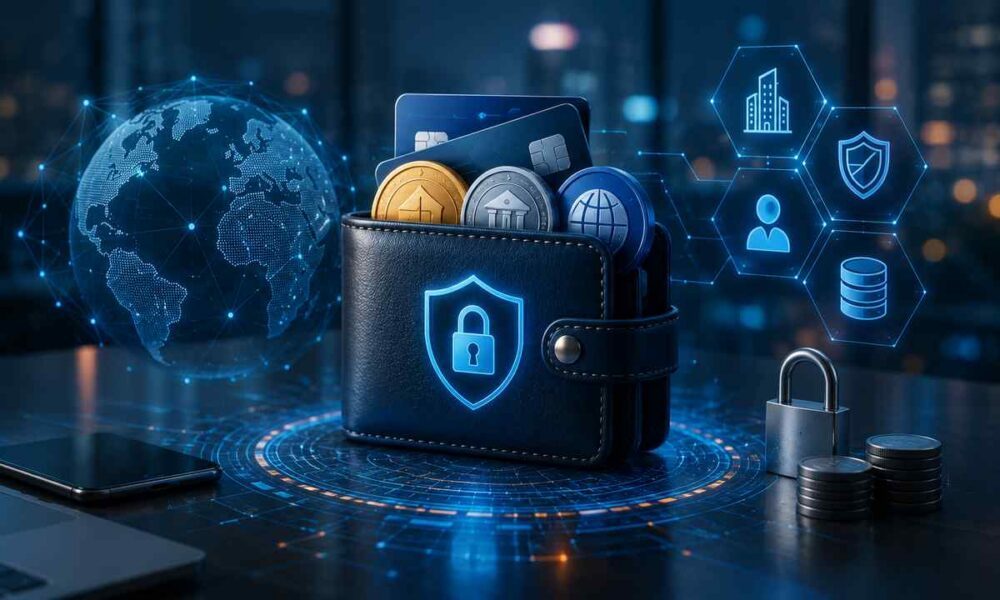
As digital assets become more common in business operations, organizations are exploring practical blockchain applications beyond cryptocurrency trading. A corporate digital wallet provides a secure environment for storing, transferring, and managing tokenized assets, including digital currencies, tokenized securities, loyalty rewards, and real-world assets recorded on blockchain networks.
Unlike personal crypto wallets, these platforms support governance controls, multi-user access, compliance requirements, and advanced security features. As blockchain adoption grows across industries, enterprise crypto wallet management is becoming an important part of treasury operations, asset custody, financial management, and broader digital business strategies.
Understanding Corporate Digital Wallets
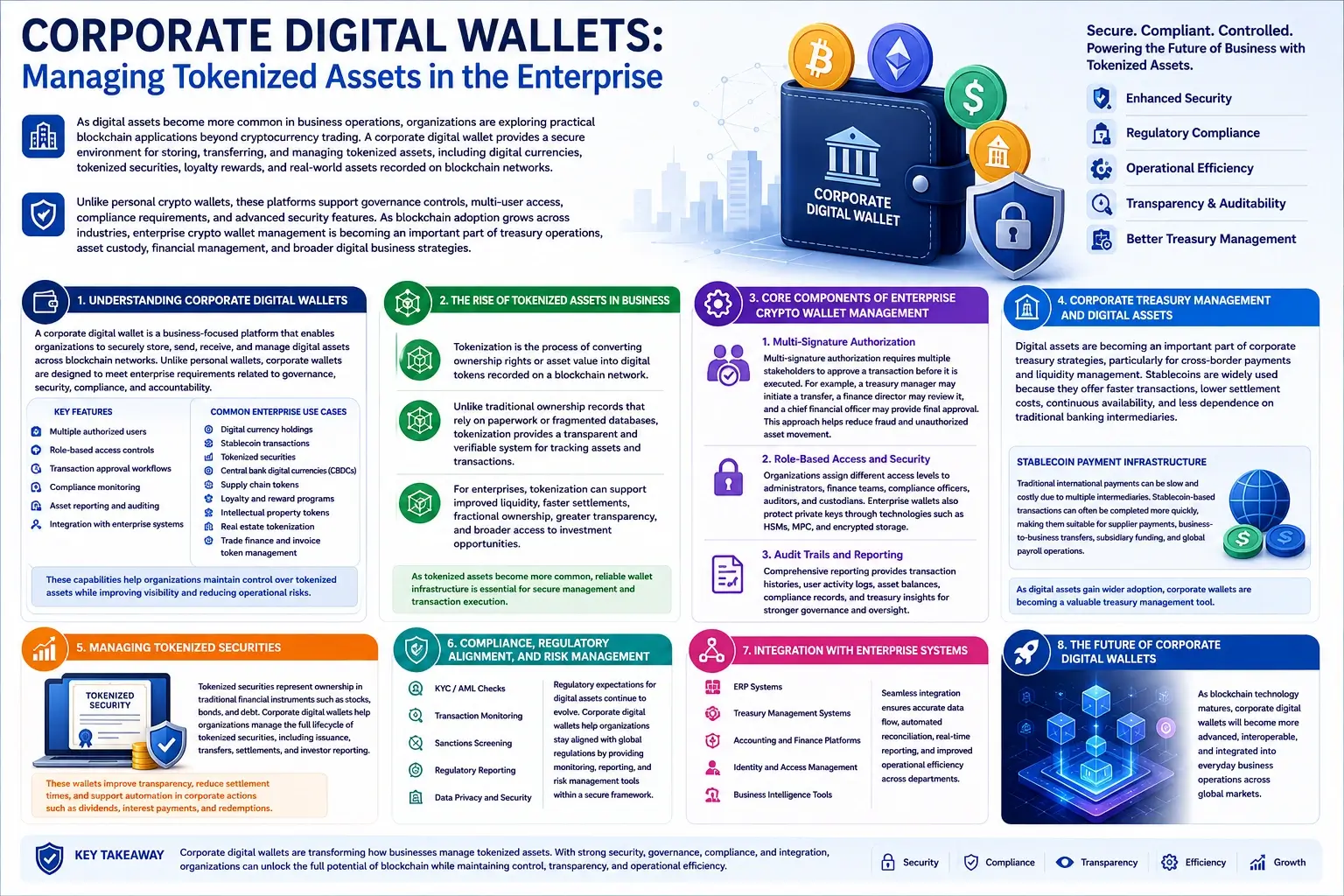
A corporate digital wallet is a business-focused platform that enables organizations to securely store, send, receive, and manage digital assets across blockchain networks. Unlike personal wallets, corporate wallets are designed to meet enterprise requirements related to governance, security, compliance, and accountability.
Key Features of Corporate Digital Wallets
Corporate digital wallets typically include:
- Multiple authorized users
- Role-based access controls
- Transaction approval workflows
- Compliance monitoring
- Asset reporting and auditing
- Integration with enterprise systems
These capabilities help organizations maintain control over tokenized assets while improving visibility and reducing operational risks.
Common Enterprise Use Cases
Organizations use corporate digital wallets for:
- Digital currency holdings
- Stablecoin transactions
- Tokenized securities
- Central bank digital currencies (CBDCs)
- Supply chain tokens
- Loyalty and reward programs
- Intellectual property tokens
- Real estate tokenization
- Trade finance and invoice token management
As blockchain adoption expands across industries, corporate digital wallets are becoming an important component of enterprise digital asset management.
The Rise of Tokenized Assets in Business
Tokenization is the process of converting ownership rights or asset value into digital tokens recorded on a blockchain network. These tokens can represent financial securities, debt instruments, commodities, real estate, intellectual property, carbon credits, loyalty rewards, and other assets.
Unlike traditional ownership records that rely on paperwork or fragmented databases, tokenization provides a transparent and verifiable system for tracking assets and transactions. This improves visibility while reducing administrative complexities.
For enterprises, tokenization can support improved liquidity, faster settlements, fractional ownership, greater transparency, and broader access to investment opportunities. As tokenized assets become more common, reliable wallet infrastructure is essential for secure management and transaction execution.
Core Components of Enterprise Crypto Wallet Management
Enterprise crypto wallet management involves much more than storing digital assets. It combines security, governance, compliance, and operational controls that help organizations manage tokenized assets safely and efficiently.
1. Multi-Signature Authorization
Multi-signature authorization requires multiple stakeholders to approve a transaction before it is executed. For example, a treasury manager may initiate a transfer, a finance director may review it, and a chief financial officer may provide final approval. This approach helps reduce fraud and unauthorized asset movement.
2. Role-Based Access and Security
Organizations assign different access levels to administrators, finance teams, compliance officers, auditors, and custodians. Enterprise wallets also protect private keys through technologies such as HSMs, MPC, and encrypted storage.
3. Audit Trails and Reporting
Comprehensive reporting provides transaction histories, user activity logs, asset balances, compliance records, and treasury insights for stronger governance and oversight.
Corporate Treasury Management and Digital Assets
Digital assets are becoming an important part of corporate treasury strategies, particularly for cross-border payments and liquidity management. Stablecoins are widely used because they offer faster transactions, lower settlement costs, continuous availability, and less dependence on traditional banking intermediaries. A corporate digital wallet helps treasury teams hold digital asset reserves, manage liquidity, execute transactions, and monitor fund movements across different markets.
Stablecoin Payment Infrastructure
Traditional international payments can be slow and costly due to multiple intermediaries. Stablecoin-based transactions can often be completed more quickly, making them suitable for supplier payments, business-to-business transfers, subsidiary funding, and global payroll operations. As digital assets gain wider adoption, corporate wallets are becoming a valuable treasury management tool.
Managing Tokenized Securities
Tokenized securities are blockchain-based versions of traditional financial assets such as stocks, bonds, and private equity interests. Managing these assets requires secure custody, regulatory compliance, and strict governance controls.
Institutional Custody Requirements
Corporate wallets handling tokenized securities must support investor verification, access restrictions, transaction approvals, and record retention. As blockchain adoption expands across capital markets, enterprise wallet platforms are becoming an important tool for securing digital asset custody and management.
Security Challenges in Enterprise Wallet Management
External Threats
- Phishing attacks
- Malware infections
- Credential theft
- Social engineering attempts
- Smart contract vulnerabilities
Internal Risks
- Unauthorized transactions
- Privilege misuse
- Poor private key management
- Human errors
Business Continuity Planning
- Key recovery mechanisms
- Disaster recovery procedures
- Backup authorization structures
- Incident response plans
Compliance and Regulatory Considerations
Organizations managing digital assets must comply with evolving regulations related to AML, KYC, tax reporting, financial disclosures, and data privacy requirements. Modern wallet platforms often include compliance automation and transaction monitoring capabilities.
Governance Frameworks
Strong governance policies should define wallet ownership, access permissions, transaction limits, approval workflows, and incident reporting procedures. These controls help organizations reduce compliance risks while maintaining operational accountability and regulatory alignment.
Integrating Wallets with Enterprise Systems
For digital assets to support everyday business operations, wallet platforms must integrate with existing enterprise systems such as ERP, treasury, accounting, payment, and risk management solutions. This integration enables seamless blockchain adoption without disrupting established workflows.
Real-Time Financial Visibility
Connected wallet infrastructure provides real-time insights into asset balances, payment activity, settlement status, and treasury positions, helping finance teams make informed decisions and improve financial oversight.
Multi-Chain Asset Management
Enterprises often hold digital assets across multiple blockchain networks, creating administration challenges. Modern wallet platforms support multi-chain management through a single interface, providing consolidated asset visibility, centralized controls, and unified reporting. This reduces operational complexity while helping organizations manage tokenized assets more efficiently.
Emerging Trends in Corporate Digital Wallets
The enterprise digital asset sector is witnessing significant developments as businesses expand their use of blockchain-based assets and payment systems.
1. Tokenized Real-World Assets and CBDCs
Organizations are increasingly tokenizing physical assets such as commercial real estate, commodities, infrastructure investments, and financing instruments. At the same time, many governments are exploring Central Bank Digital Currencies (CBDCs), which may create new requirements for enterprise wallet infrastructure and asset management.
2. Advanced Wallet Capabilities
Modern wallet platforms are moving beyond basic storage by incorporating services such as lending, staking, liquidity management, and settlement automation. Artificial intelligence is also supporting wallet operations through fraud detection, transaction analysis, risk assessment, behavioral monitoring, and compliance screening. These capabilities help organizations strengthen security, improve oversight, and manage digital assets more effectively.
Best Practices for Enterprises Adopting Digital Wallets
Organizations adopting digital asset infrastructure should establish clear policies and controls before deploying a corporate digital wallet.
Key Recommendations
- Define ownership structures, approval workflows, user responsibilities, and risk management policies.
- Implement strong security measures, including multi-signature approvals, hardware security modules (HSMs), multi-factor authentication, access monitoring, and regular audits.
- Choose wallet platforms that can support new blockchain networks, additional asset types, regulatory changes, and future business growth.
- Provide training for finance, treasury, compliance, and leadership teams on blockchain fundamentals, wallet operations, key management practices, and regulatory obligations.
A structured approach helps businesses strengthen governance, reduce operational risks, and support long-term digital asset management goals.
Conclusion
The growing adoption of tokenized assets is creating new opportunities across finance, treasury management, real estate, and other business functions. As organizations increase their use of blockchain-based assets, the corporate digital wallet is becoming an important tool for asset custody, ownership management, and governance.
Effective enterprise crypto wallet management extends beyond digital asset storage. It involves security controls, compliance measures, approval workflows, reporting capabilities, and integration with enterprise systems. Organizations that invest in robust wallet infrastructure and governance frameworks can manage tokenized assets with greater confidence and control. As blockchain adoption expands, corporate digital wallets will play a central role in supporting secure and efficient digital asset operations.
FAQs
1. What is a corporate digital wallet?
A corporate digital wallet is a business-grade platform designed to store, transfer, and manage digital assets securely. It includes governance controls, approval workflows, compliance tools, and access management features for enterprise users.
2. How is a corporate digital wallet different from a personal crypto wallet?
Unlike personal wallets, corporate digital wallets support multiple authorized users, role-based permissions, transaction approval processes, auditing capabilities, and compliance monitoring to meet enterprise governance and security requirements.
3. Why is enterprise crypto wallet management important?
Enterprise crypto wallet management helps organizations protect digital assets, maintain regulatory compliance, monitor transactions, manage access permissions, and reduce operational risks associated with blockchain-based financial activities.
4. What types of assets can be stored in a corporate digital wallet?
Corporate digital wallets can manage cryptocurrencies, stablecoins, tokenized securities, CBDCs, loyalty tokens, supply chain assets, intellectual property tokens, and tokenized real estate or financial instruments.
5. What security features are commonly found in enterprise wallet solutions?
Enterprise wallet platforms commonly include multi-signature authorization, hardware security modules, encrypted key storage, multi-factor authentication, audit trails, access monitoring, and disaster recovery mechanisms for stronger asset protection.
6. How do corporate digital wallets support regulatory compliance?
Many wallet platforms provide AML and KYC support, transaction monitoring, reporting tools, investor verification, audit records, and governance controls that help organizations address regulatory and compliance requirements.
7. Can corporate digital wallets integrate with existing enterprise systems?
Yes. Modern wallet solutions can integrate with ERP platforms, accounting software, treasury management systems, payment infrastructure, and risk management tools, enabling seamless digital asset operations across the organization.