Retail is finding new ways to connect digital convenience with in-store shopping, and augmented reality (AR) is becoming a key part of that effort. The rise of augmented reality retail 2026 initiatives reflects growing demand for more interactive and personalized shopping experiences. Consumers want to see how products look, fit, or function before making a purchase, both online and in physical stores.
What began with virtual try-on tools has expanded into a broader range of applications. Retailers now use AR to help shoppers visualize products, access detailed information, and find items within large stores. As AR technology becomes more accessible through smartphones, smart glasses, and retail apps, the AR in-store customer experience is becoming more engaging, practical, and customer-focused.
Understanding AR in Retail
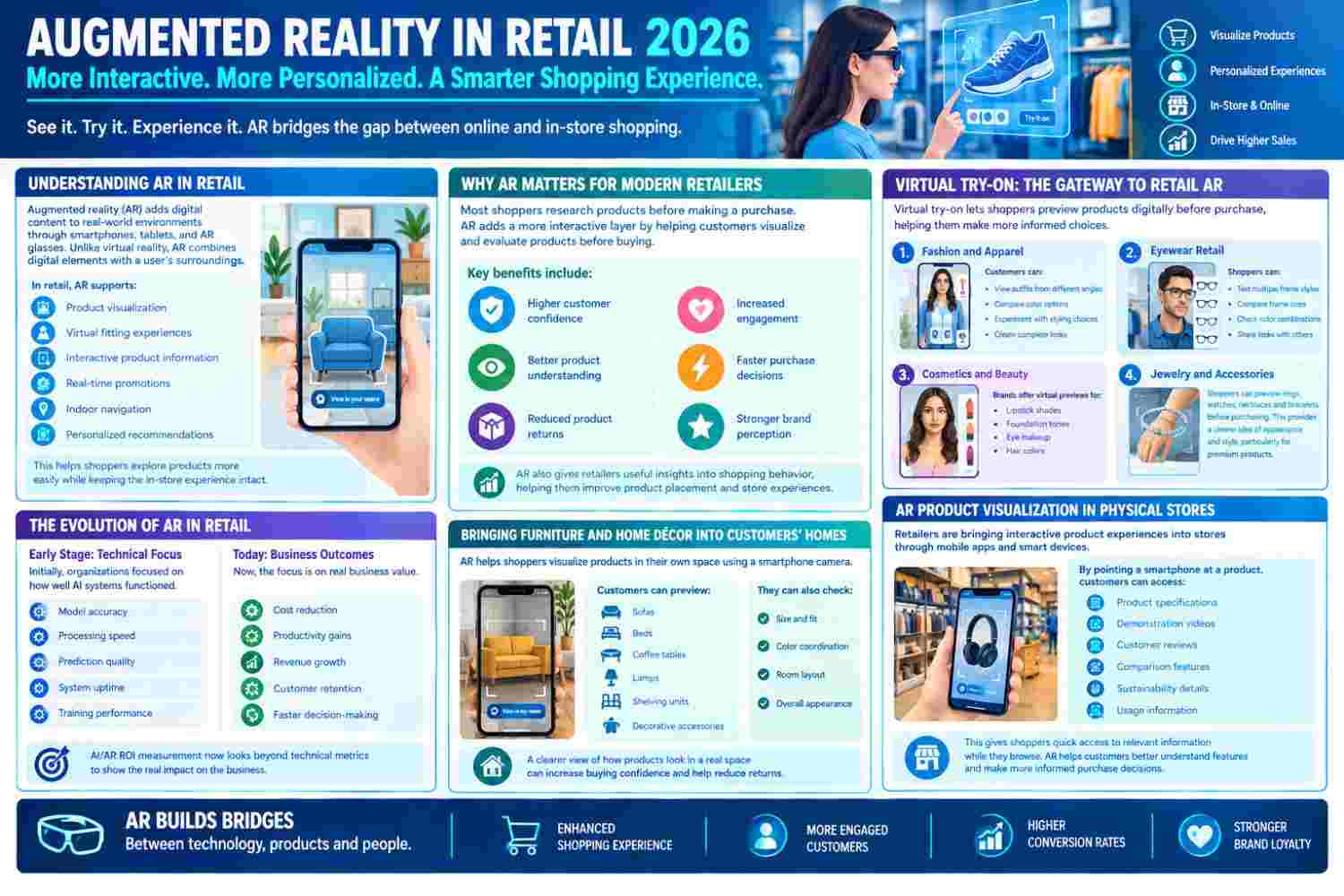
Augmented reality (AR) adds digital content to real-world environments through smartphones, tablets, and AR glasses. Unlike virtual reality, AR combines digital elements with a user’s surroundings.
In retail, AR supports:
- Product visualization
- Virtual fitting experiences
- Interactive product information
- Real-time promotions
- Indoor navigation
- Personalized recommendations
This helps shoppers explore products more easily while keeping the in-store experience intact.
Why AR Matters for Modern Retailers
Most shoppers research products before making a purchase. They compare prices, read reviews, and explore options across channels. AR adds a more interactive layer by helping customers visualize and evaluate products before buying.
Key benefits include:
- Higher customer confidence
- Better product understanding
- Reduced product returns
- Increased engagement
- Faster purchase decisions
- Stronger brand perception
AR also gives retailers useful insights into shopping behavior, helping them improve product placement and store experiences.
Virtual Try-On: The Gateway to Retail AR
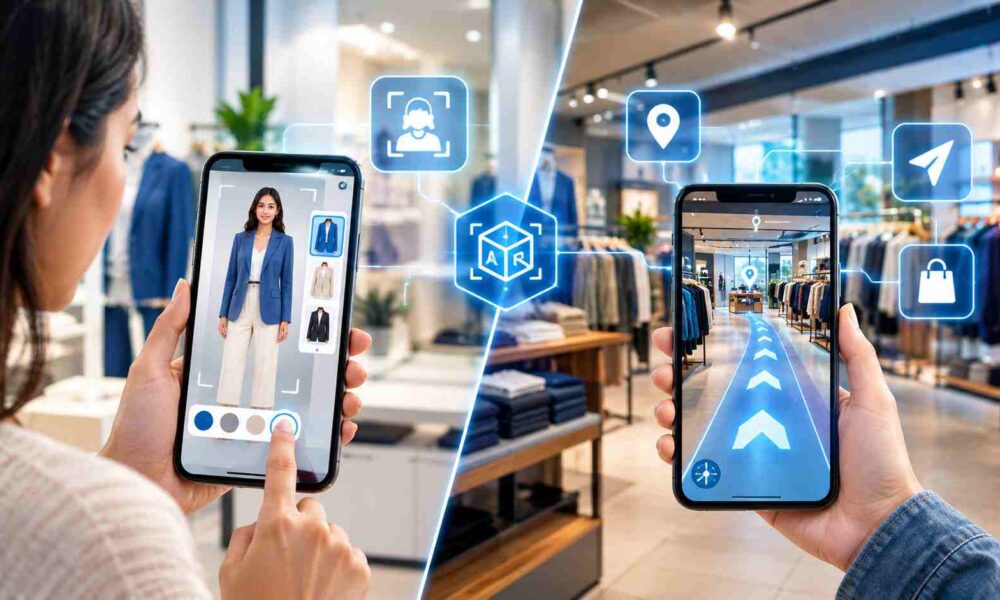
Virtual try-on is one of the most popular uses of AR in retail. It allows shoppers to preview products digitally before making a purchase, helping them make more informed choices.
1. Fashion and Apparel
Clothing brands use AR to help customers visualize outfits, colors, and styles.
Customers can:
- View outfits from different angles
- Compare color options
- Experiment with styling choices
- Create complete looks
2. Eyewear Retail
Using smartphone cameras, shoppers can:
- Test multiple frame styles
- Compare frame sizes
- Check color combinations
- Share looks with others
3. Cosmetics and Beauty
Beauty brands offer virtual previews for:
- Lipstick shades
- Foundation tones
- Eye makeup
- Hair colors
4. Jewelry and Accessories
AR also allows shoppers to preview rings, watches, necklaces, and bracelets before purchasing. This provides a clearer idea of appearance and style, particularly for premium products.
Bringing Furniture and Home Décor into Customers’ Homes
Choosing furniture online can be challenging, especially when it is difficult to judge size, style, or placement. AR helps shoppers visualize products in their homes using a smartphone camera.
Customers can preview:
- Sofas
- Beds
- Coffee tables
- Lamps
- Shelving units
- Decorative accessories
This allows them to check:
- Size and fit
- Color coordination
- Room layout
- Overall appearance
A clearer view of how products look in a real space can increase buying confidence and help reduce returns.
AR Product Visualization in Physical Stores
AR is no longer limited to online shopping. Retailers are bringing interactive product experiences into physical stores through mobile apps and smart devices.
By pointing a smartphone at a product, customers can access:
- Product specifications
- Demonstration videos
- Customer reviews
- Comparison features
- Sustainability details
- Usage information
This gives shoppers quick access to relevant information while they browse. For products such as electronics, appliances, and sporting equipment, AR can help customers better understand features and make more informed purchase decisions.
The Rise of AR-Powered Smart Mirrors
Smart mirrors are becoming a popular AR feature in retail stores. These interactive displays help shoppers explore products without repeatedly visiting fitting rooms.
Shoppers can:
- View clothing in different colors
- Explore matching accessories
- Preview complete outfits
- Access styling suggestions
- Request alternate sizes
Smart mirrors make product selection easier and more interactive. For retailers, they create opportunities to showcase related products and encourage additional purchases during the shopping journey.
AR In-Store Customer Experience Is Becoming More Personalized
Personalization is playing a bigger role in retail, and the AR in-store customer experience is evolving around customer preferences and shopping habits.
Customers can receive:
- Tailored promotions
- Location-based offers
- Product recommendations
- Loyalty rewards
- Personalized shopping routes
For example, AR can guide shoppers toward products that match their interests or previous purchases, making in-store visits more relevant and engaging.
AR Navigation: Solving a Common Retail Challenge
Finding products in large stores can be time-consuming, especially in supermarkets, department stores, and warehouse outlets. AR navigation helps shoppers locate items more quickly through a retailer’s mobile app.
Visual guides may include:
- Directional arrows
- Highlighted pathways
- Shelf markers
- Product location indicators
Benefits for customers:
- Faster shopping trips
- Easier product discovery
- Less frustration
Benefits for retailers:
- Higher customer satisfaction
- Better traffic flow
- Greater visibility for promoted products
Navigation data can also help retailers understand shopping patterns and improve store layouts.
Enhancing Product Discovery Through AR
Many shopping decisions happen inside the store. AR helps customers discover products by displaying relevant information as they browse different sections.
Applications include:
- Seasonal product highlights
- Limited-time offers
- Complementary product suggestions
- Trending items
- New product launches
This helps shoppers explore more options while giving retailers additional opportunities to showcase products.
AR and Omnichannel Retail Strategies
Shoppers often move between websites, mobile apps, social media, and physical stores before making a purchase. AR helps connect these touchpoints, creating a more connected shopping experience.
Examples include:
- Virtual product previews before store visits
- AR-based shopping lists
- Access to product information in-store
- Purchases continued across devices
- Loyalty program integration
By linking digital and physical channels, AR helps create a smoother customer journey from product discovery to purchase.
Challenges Slowing AR Adoption
While AR offers many opportunities, adoption is not without challenges. Retailers must address technology, data, and customer-related concerns before launching large-scale AR initiatives.
1. Technology Costs
AR projects often require investment in:
- Software platforms
- Content creation
- Hardware systems
- Application maintenance
2. Data Quality
AR experiences depend on accurate product information. Incomplete or outdated data can affect customer trust and usability.
3. Consumer Awareness
Some shoppers are still unfamiliar with AR features, which can limit adoption.
4. Privacy Concerns
Many AR applications collect location and shopping data. Retailers need clear policies and transparent communication around data usage.
The Role of AI and AR Together
AR and artificial intelligence are increasingly being used together in retail. While AI analyzes customer preferences and shopping patterns, AR presents information in an interactive and visual format.
Applications include:
- Personalized product recommendations
- Virtual shopping assistants
- Dynamic pricing displays
- Inventory visibility
- Interactive customer support
Together, AI and AR help retailers deliver more relevant shopping experiences. Customers receive product suggestions and information that match their interests, making product discovery and purchasing decisions easier.
What Retail AR May Look Like by 2026
The future of augmented reality retail 2026 is likely to extend beyond smartphone-based experiences. Retailers are exploring new ways to make shopping more interactive and connected.
1. Smart Glasses Shopping
Smart glasses could provide:
- Product ratings
- Promotions
- Navigation directions
- Shopping lists
- Personalized recommendations
2. More Immersive Store Experiences
Interactive product demonstrations may combine digital content with physical products, allowing shoppers to explore features in real time.
3. Advanced Personalization
AR experiences could become more relevant based on customer preferences, shopping history, and location.
4. Better Integration Across Channels
Future AR tools may connect online and in-store interactions more closely, creating a consistent shopping experience across multiple touchpoints.
Conclusion
AR has moved beyond experimental retail technology and is becoming a practical tool for improving shopping experiences. From virtual try-ons and furniture visualization to smart mirrors and indoor navigation, retailers are using AR to help customers make more informed purchase decisions.
The growing focus on the AR in-store customer experience highlights the demand for more engaging and personalized interactions inside physical stores. As investments in augmented reality retail 2026 continue to grow, AR is expected to play a larger role in connecting digital and in-store shopping. Retailers that adopt these technologies effectively can create more interactive experiences and strengthen customer loyalty.
FAQs
1. What is augmented reality in retail?
Augmented reality in retail overlays digital content onto real-world environments through smartphones, tablets, or smart glasses. It helps shoppers visualize products, access information, compare options, and make purchase decisions with greater confidence.
2. How does virtual try-on technology work?
Virtual try-on technology uses AR and device cameras to place digital products onto a shopper’s image. Customers can preview clothing, eyewear, cosmetics, or accessories before purchasing, making product selection easier.
3. Can AR help customers navigate large stores?
Yes, AR navigation guides shoppers through stores using visual directions displayed on mobile devices. It helps locate products quickly, reduces search time, improves convenience, and supports a smoother shopping experience.
4. How does AR reduce product returns?
AR helps customers visualize products before buying, whether testing apparel or placing furniture in a room. A better understanding of appearance and size often reduces purchase mistakes and returns.
5. What industries use retail AR the most?
Fashion, beauty, eyewear, furniture, home décor, electronics, and jewelry retailers are among the leading adopters of AR. These industries use visualization tools to help customers evaluate products before purchasing.
6. Is AR only useful for customers?
No. Retail employees use AR for inventory checks, product information access, staff training, and customer assistance. These applications can improve daily operations while supporting faster and more informed service.
7. What will AR in retail look like by 2026?
By 2026, retail AR is expected to feature smart glasses, advanced personalization, interactive product displays, improved indoor navigation, and stronger connections between online and in-store shopping experiences.