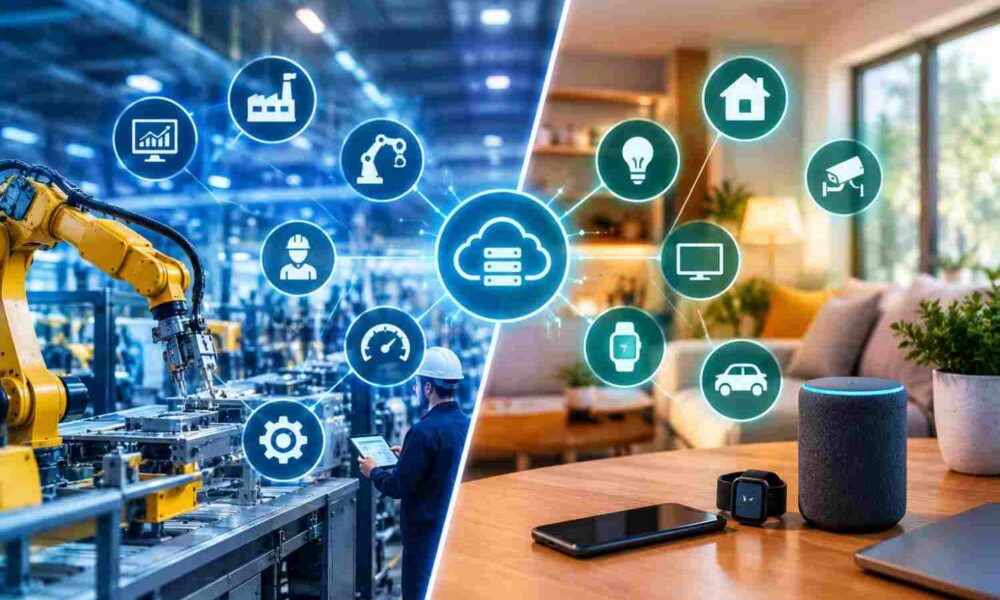
The Internet of Things (IoT) connects devices, machines, and systems to collect and exchange data. From smart home gadgets and wearable devices to connected factory equipment, IoT has become a key part of both everyday life and business operations.
However, not all IoT applications serve the same purpose. A smart speaker in a home and a sensor monitoring industrial equipment may use similar technologies, but they are designed to achieve very different goals.
This makes understanding industrial IoT vs consumer IoT important for business leaders evaluating technology investments. Whether an organization is improving manufacturing, logistics, or asset management, knowing the differences between these two IoT categories can support better planning and decision-making.
What Is IoT?
The Internet of Things (IoT) refers to a network of connected devices that collect, share, and process data through internet connectivity. These devices use sensors, software, and communication technologies to monitor activity, support automation, and provide useful information.
Common examples include:
- Smart speakers
- Fitness bands
- Connected home appliances
- Security cameras
- Industrial sensors
- Smart factory equipment
- Fleet tracking systems
What Is Consumer IoT?
Consumer IoT refers to connected devices designed for individuals and households. These devices help users manage daily activities, monitor health, improve comfort, or control home environments through internet connectivity.
Common consumer IoT devices include:
- Smart TVs
- Voice assistants
- Smart thermostats
- Wearables and fitness trackers
- Connected doorbells
- Smart lighting systems
- Smart refrigerators
Key Characteristics of Consumer IoT
- Focuses on convenience and personal use
- Lower deployment costs
- User-friendly interfaces
- Broad consumer adoption
- Moderate security needs
- Shorter product life cycles
What Is Industrial IoT (IIoT)?
Industrial IoT (IIoT) refers to the use of connected devices and sensors in industries such as manufacturing, energy, transportation, healthcare, and logistics. These systems collect data from machines, equipment, and industrial assets to support maintenance, monitoring, and operational decision-making.
Common IIoT applications include:
- Predictive maintenance
- Remote asset monitoring
- Smart manufacturing
- Supply chain tracking
- Industrial robotics
- Energy management
- Quality control
Key Characteristics of Industrial IoT
- Focuses on operational performance
- Supports critical business functions
- High reliability requirements
- Works in demanding environments
- Strong security controls
- Measurable business value
Industrial IoT vs Consumer IoT: Key Differences
When discussing industrial IoT vs consumer IoT, it is important to understand that both uses connected devices and data, but they are built for different users and goals. For business leaders looking for an IIoT vs IoT explained business perspective, the differences extend beyond technology and directly affect operations, security, and investment decisions.
1. Purpose and Objectives
Consumer IoT focuses on personal use. Devices such as smart speakers, fitness trackers, and connected home systems are designed to improve comfort, convenience, and entertainment.
Industrial IoT focuses on business activities. It helps organizations monitor equipment, reduce downtime, and improve production performance.
Examples:
Consumer IoT
- Smartwatch tracking daily activity
- Smart speaker playing music
Industrial IoT
- Sensor detecting equipment issues
- Production machine reporting performance data
2. Scale of Deployment
Consumer IoT usually operates within homes or personal environments with a limited number of devices.
Industrial IoT deployments can involve thousands of connected assets across:
- Factories
- Warehouses
- Power plants
- Transportation networks
Managing such large deployments requires centralized monitoring and device management.
3. Reliability Requirements
If a smart home device stops working, the impact is usually minimal. In industrial environments, system failures can interrupt production, delay operations, or affect worker safety. As a result, IIoT systems are built for continuous operation and dependable performance.
4. Security Expectations
Security matters in both environments, but the risks are higher in industrial settings. A compromised consumer device may expose personal data, while an attack on industrial systems can affect operations and critical infrastructure.
Industrial IoT commonly uses:
- Device authentication
- Access controls
- Network segmentation
- Threat monitoring
5. Data Volume and Complexity
Consumer IoT devices collect relatively simple data, such as activity levels or temperature preferences.
Industrial IoT systems generate large volumes of machine and operational data, including:
- Equipment status
- Production output
- Inventory movement
- Performance metrics
This information supports analytics and operational reporting.
6. Device Lifespan and ROI
Industrial equipment may remain in service for decades, making long-term compatibility important. Businesses also evaluate IIoT investments based on measurable outcomes such as:
- Reduced downtime
- Lower maintenance costs
- Higher productivity
- Better product quality
These differences highlight why industrial IoT vs consumer IoT is an important consideration for organizations planning connected technology investments.
Why IIoT Matters More for Business Leaders
For organizations evaluating IIoT vs IoT explained business, Industrial IoT delivers value across multiple areas of operations.
1. Improved Operations
Connected sensors provide data on equipment performance, production activity, and resource usage, helping teams identify issues and make informed decisions.
2. Predictive Maintenance
IIoT systems analyze machine data to detect potential problems early. This can reduce downtime, lower repair costs, and extend equipment life.
3. Better Safety and Compliance
Connected monitoring systems track factors such as:
- Air quality
- Temperature levels
- Equipment conditions
- Worker safety indicators
4. Enhanced Supply Chain Visibility
IIoT supports the monitoring of:
- Inventory levels
- Shipment status
- Asset locations
- Warehouse operations
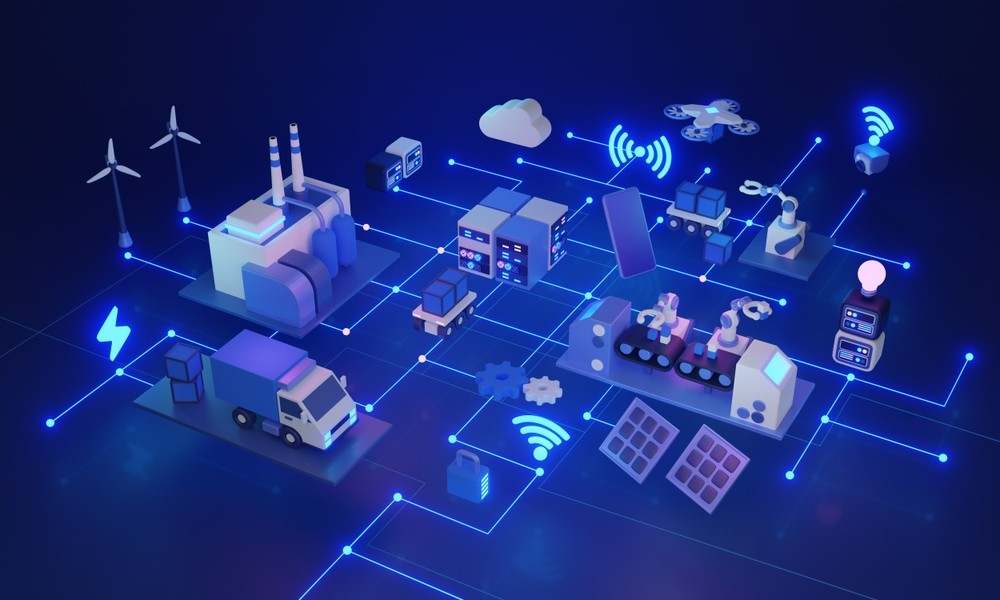
Common Industries Using Industrial IoT
Industrial IoT (IIoT) is used across industries where connected equipment and real-time data support daily operations.
Manufacturing
- Predictive maintenance
- Production monitoring
- Quality control
Energy and Utilities
- Grid monitoring
- Asset tracking
- Equipment diagnostics
Logistics and Transportation
- Fleet management
- Cargo tracking
- Fuel monitoring
Healthcare
- Medical equipment monitoring
- Asset tracking
- Facility management
Oil and Gas
- Pipeline monitoring
- Leak detection
- Remote operations
Challenges Businesses Should Consider
While Industrial IoT (IIoT) offers many benefits, organizations may face challenges during adoption.
1. Legacy System Integration
Many businesses still rely on older equipment that was not built for connectivity. Connecting these systems often requires additional hardware or software.
2. Cybersecurity Risks
A growing number of connected devices can increase security concerns. Protecting networks, devices, and operational data remains a key priority.
3. Data Management
IIoT systems generate large volumes of data. Organizations need the right tools and processes to turn that data into useful insights.
4. Skills Gap
Successful IIoT projects often require expertise in:
- Networking
- Cybersecurity
- Data analytics
- Cloud technologies
- Industrial operations
The Future of Industrial IoT
Industrial IoT (IIoT) is becoming a larger part of manufacturing, logistics, energy, and other sectors where connected assets support operational decisions.
Key developments include:
- AI-powered analytics
- Edge computing
- Digital twins
- Autonomous operations
- Private 5G networks
- Advanced robotics
These technologies help businesses analyze operational data, monitor assets more effectively, and support faster decision-making. IIoT is expected to play a growing role as organizations invest in connected operations and data-driven processes.
Conclusion
The difference between industrial IoT vs consumer IoT goes beyond the devices being used. While Consumer IoT focuses on convenience, entertainment, and personal use, Industrial IoT is built to support business operations, equipment monitoring, productivity, and workplace safety.
For decision-makers, understanding IIoT vs IoT explained business can help when evaluating connected technology investments. Consumer devices are designed to make everyday tasks easier, whereas IIoT systems help organizations monitor assets, reduce equipment downtime, and gain better visibility into operations.
As connected technologies become more common across industries, businesses that adopt Industrial IoT with clear objectives and practical use cases can gain long-term operational and financial benefits.
FAQs
1. What is the main difference between Industrial IoT and Consumer IoT?
Industrial IoT focuses on connected systems used in industries to monitor equipment, improve productivity, and support operations. Consumer IoT is designed for individuals and primarily supports convenience, entertainment, health tracking, and smart home applications.
2. Why does Industrial IoT require stronger security measures?
Industrial IoT systems often support critical operations and connected machinery. A cyberattack can interrupt production, affect equipment performance, expose sensitive business data, and create operational or safety risks within industrial environments.
3. Which industries use Industrial IoT the most?
Industrial IoT is widely used in manufacturing, energy, logistics, healthcare, mining, and oil and gas sectors. These industries use connected systems for monitoring assets, maintenance planning, operational visibility, and equipment performance tracking.
4. Can Industrial IoT be integrated with legacy equipment?
Yes. Many Industrial IoT solutions can connect with older machinery using sensors, gateways, and integration platforms. This allows businesses to collect operational data without replacing existing equipment or production systems.
5. How does Industrial IoT help reduce business costs?
Industrial IoT helps detect equipment issues early, reduces unexpected downtime, improves asset usage, lowers maintenance expenses, and provides operational insights that support more efficient resource allocation and cost management.
6. What role does artificial intelligence play in Industrial IoT?
Artificial intelligence helps analyze machine and operational data, identify patterns, predict potential equipment failures, and support faster decisions. It enables organizations to gain more value from the data collected by IIoT systems.
7. Is Industrial IoT suitable for small and medium-sized businesses?
Yes. Industrial IoT is not limited to large enterprises. Many scalable solutions allow small and medium-sized businesses to monitor equipment, improve operational visibility, reduce downtime, and manage resources more effectively.