Introduction
A single missing spare part can stop an entire production line. In industries such as aerospace, rail, oil and gas, utilities, and heavy manufacturing, the real cost of equipment failure is rarely the component itself. The larger expense comes from downtime, delayed operations, and disrupted supply chains. Traditional spare parts management depends heavily on warehouses filled with thousands of low-demand components that may never be used, yet still consume storage space, capital, and maintenance resources.
Additive manufacturing is changing this model. Instead of storing physical inventory, companies are now creating secure digital libraries of qualified part files that can be produced on demand through 3D printing. This digital inventory approach reduces lead times, lowers storage costs, and improves supply chain resilience by allowing spare parts to be manufactured closer to the point of use. In 2026, this shift is becoming a practical strategy for organizations looking to reduce operational risk and modernize aftermarket support.
The Growing Problem with Traditional Spare Parts Inventory
1. High Inventory Costs
Maintaining spare parts inventory is expensive. Organizations operating large maintenance, repair, and operations (MRO) warehouses often spend significant amounts on storage, insurance, handling, and inventory monitoring. Many parts remain untouched for years, yet businesses continue paying to keep them available.
Industries with aging equipment face an even larger challenge because they must maintain stock for outdated systems long after suppliers reduce production. The longer components sit in storage, the greater the financial burden.
2. Obsolescence Creates Waste
A major problem with physical inventory is obsolescence. Machinery upgrades, regulatory changes, and product redesigns can make stored parts unusable without warning. Companies often discover that large portions of inventory no longer match operational or compliance requirements.
Parts with shelf-life limitations create another issue. Rubber seals, specialized polymers, and chemical-sensitive materials may degrade over time even when unused, resulting in write-offs and additional purchase cycles.
3. Long Lead Times Affect Operations
Downtime becomes extremely costly when spare parts are difficult to source. Components designed for older systems or custom equipment may require weeks or months for delivery. During this time, production capacity drops and operational losses increase.
For manufacturers, utilities, and transportation operators, delayed part availability can affect customer commitments, maintenance schedules, and revenue generation. In high-value operations such as aviation and offshore energy production, every hour of downtime directly affects profitability.
What Is the Digital Inventory Model?
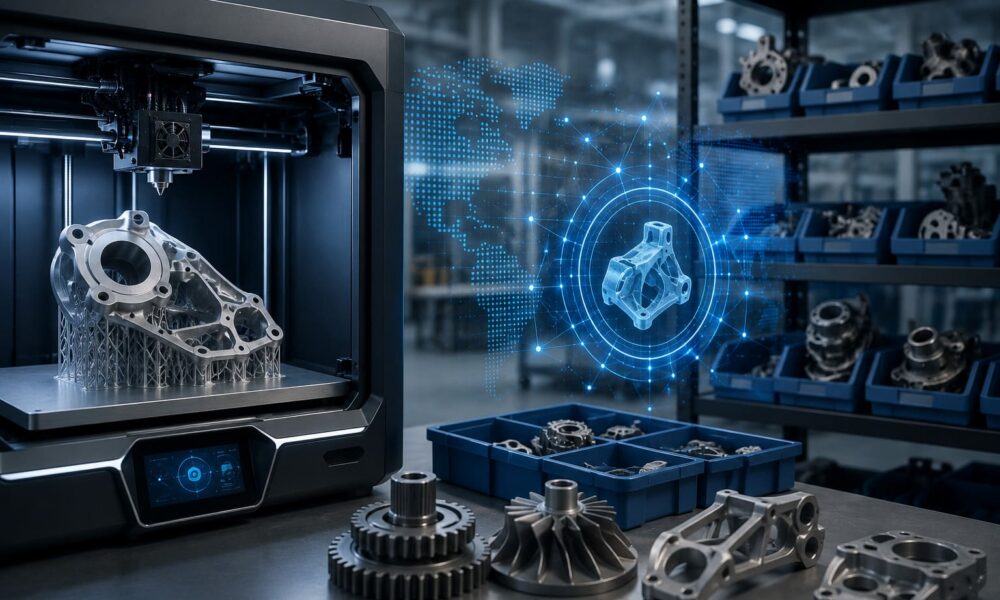
Digital inventory replaces physical spare parts with validated digital files stored in secure repositories. When a component is required, the file is transmitted to a qualified additive manufacturing facility where the part is produced on demand.
This process combines digital design, material validation, additive manufacturing, inspection, and post-processing into a connected spare parts system.
1. Part Selection
Not every component is suitable for additive manufacturing. The strongest candidates usually share several characteristics:
- Low production volume
- Long procurement lead times
- High operational importance
- Complex geometries
- Legacy equipment compatibility
Parts that are rarely used but critical during equipment failure often provide the highest return from digital inventory adoption.
2. Digital File Creation
If CAD models already exist, the design can be adapted for additive production. Legacy components without digital records require reverse engineering through 3D scanning technologies.
Structured light scanning and CT scanning allow organizations to capture the geometry of older parts and convert them into printable digital models. This process is becoming increasingly important for industries operating equipment designed decades ago.
3. Secure File Storage
Digital part files must be stored securely. Manufacturers need strict version control, access management, and traceability systems to prevent unauthorized modifications or production errors.
Cybersecurity is now a major focus on digital manufacturing. A corrupted or altered file could produce defective components that fail under operational stress. For this reason, businesses are investing in encrypted storage systems and controlled digital workflows.
4. Additive Manufacturing Production
Once a file is approved, the part can be printed by an in-house facility or an external manufacturing partner. The production process must match validated material and machine requirements.
The maturity of additive manufacturing differs across industries. Non-critical industrial parts are relatively easier to qualify, while aerospace and defense applications require strict certification and testing standards.
5. Inspection and Post-Processing
Most printed parts require post-processing before final installation. This may include:
- Surface finishing
- Heat treatment
- Support removal
- CNC machining
- Dimensional verification
Inspection procedures confirm material strength, dimensional accuracy, and overall structural performance before the component enters service.
Industries Leading Digital Spare Parts Adoption
1. Rail and Transit
Rail operators manage large fleets that remain active for decades, making spare parts availability a major operational concern. As rolling stock ages, certain components become difficult or expensive to source through traditional suppliers.
Additive manufacturing offers a practical alternative by allowing operators to store digital designs and print out obsolete parts when needed. This approach reduces dependence on long-term warehousing and shortens maintenance cycles.
European rail networks and maintenance providers have already adopted digital spare parts systems for interior components, brackets, housings, and maintenance equipment.
2. Aerospace and Defense
Aircraft downtime creates significant financial pressure. When an aircraft remains grounded due to a missing component, airlines face high operational losses and scheduling disruptions.
Digital inventory allows aerospace suppliers and maintenance teams to produce parts faster and closer to maintenance hubs. Defense organizations are also investing heavily in additive manufacturing because field-deployable production improves logistics flexibility in remote locations.
The sector still operates under strict certification rules, especially for flight-critical components. However, adoption continues to grow for tooling, cabin interiors, maintenance equipment, and non-structural parts.
3. Oil and Gas
Remote oil and gas operations depend heavily on continuous equipment performance. Spare part shortages at offshore platforms or isolated facilities can stop production for extended periods.
Additive manufacturing reduces this risk by allowing companies to produce selected components near operational sites. Hybrid manufacturing methods combining 3D printing with CNC machining are becoming common for valves, flanges, and maintenance parts that require tighter tolerances.
4. Industrial Manufacturing
Manufacturing facilities are increasingly using additive manufacturing for tooling, jigs, fixtures, brackets, and robotic support equipment. Instead of waiting weeks for custom machining, companies can produce replacement tools within hours.
This capability helps factories respond faster to production interruptions and engineering changes. Flexible manufacturing environments benefit the most because part modifications can be implemented quickly through updated digital files.
Financial Benefits of Digital Inventory
1. Lower Storage Costs
Digital inventory reduces the need for large physical stockrooms. Businesses no longer need to maintain high quantities of low-turnover parts that occupy expensive warehouse space.
Studies show that companies can reduce storage-related costs by as much as 40% to 60% for selected spare part categories.
2. Reduced Downtime
The largest financial advantage often comes from reduced downtime. Instead of waiting weeks for supplier delivery, businesses can produce parts within days or even hours.
For operations where equipment availability directly affects revenue, faster spare part access creates measurable operational value.
3. Less Obsolescence
Digital part files remain usable even as equipment evolves. Files can be updated, modified, and revalidated without requiring physical inventory replacement.
This significantly lowers inventory write-offs caused by outdated components or supplier discontinuation.
4. Better Supply Chain Flexibility
Localized manufacturing reduces transportation dependency and improves responsiveness during disruptions. Businesses gain greater control over part availability without relying entirely on offshore suppliers or fragile logistics networks.
Qualification and Governance Requirements
Material and Process Validation
The reliability of a printed part depends on both material quality and manufacturing consistency. Organizations must validate printing parameters, machine settings, and material specifications before approving production use. Even a little process variation can affect mechanical performance.
First-Article Testing
Before deployment, sample parts usually undergo first-article inspection. These tests verify whether printed components meet operational requirements and dimensional specifications. Industries with safety-critical systems often require extensive testing before certification approval.
Traceability Documentation
Every printed component should include a complete production history, including:
- File version
- Material batch
- Printing parameters
- Facility identification
- Inspection records
This documentation supports regulatory compliance and maintenance traceability.
Cybersecurity Protection
As more supply chains become digital, cybersecurity risks increase. Secure data transmission, encrypted storage, and controlled manufacturing access are essential for protecting intellectual property and preventing production vulnerabilities.
How Businesses Can Start a Digital Spare Parts Programme
1. Analyze Existing Inventory
The first step is identifying parts with high inventory costs, long lead times, and operational importance. Low-demand components with expensive procurement cycles often provide the strongest return.
2. Prioritize Legacy Equipment
Legacy systems usually create the largest spare parts challenges because suppliers may no longer support older product lines. Reverse engineering these components creates permanent digital assets for future production.
3. Choose Qualified Manufacturing Partners
Businesses should work only with manufacturing providers that meet required quality and industry standards. Certification becomes especially important for regulated sectors.
4. Build Governance Early
Version control, digital security, validation procedures, and approval workflows should be established before scaling digital inventory operations. Strong governance reduces future compliance and traceability problems.
Conclusion
Digital spare parts inventory is becoming a practical operational strategy across multiple industries. By combining additive manufacturing with secure digital file management, organizations can reduce storage costs, minimize downtime, and improve supply chain resilience.
Rail, aerospace, oil and gas, and industrial manufacturing companies are already using the model to support aging equipment, reduce procurement delays, and modernize maintenance operations. As additive manufacturing technologies continue to mature, digital inventory will play an increasingly important role in global spare parts management.
Physical warehouses will continue to exist, but their role is changing. Instead of storing every possible component, companies are beginning to rely on digital production networks capable of manufacturing selected parts when and where they are needed. For businesses facing rising downtime costs and supply chain uncertainty, the shift toward digital inventory is becoming difficult to ignore.
FAQs
1. What is digital spare parts inventory?
Digital spare parts inventory replaces physical stock with validated digital files that can be produced through additive manufacturing when required. This approach reduces storage costs, shortens lead times, and improves spare parts availability.
2. Which industries benefit most from additive spare parts manufacturing?
Industries with expensive downtime and aging equipment benefit the most. Aerospace, rail, oil and gas, defense, utilities, and industrial manufacturing are among the leading adopters of digital inventory strategies.
3. Are all spare parts suitable for additive manufacturing?
No. Additive manufacturing works best for low-volume, high-value, or difficult-to-source components. Factors such as material requirements, operational criticality, and manufacturing feasibility determine whether a part qualifies for digital production.
4. How does additive manufacturing reduce downtime?
Instead of waiting weeks for supplier delivery, companies can print approved spare parts closer to operational sites. Faster production and local availability help organizations restore equipment and continue operations much sooner.
5. Why is cybersecurity important in digital inventory systems?
Digital part files contain sensitive engineering data. Unauthorized access or file manipulation can result in defective components, operational failures, and intellectual property risks. Strong cybersecurity protects manufacturing accuracy and supply chain integrity.
6. What are the biggest financial advantages of digital inventory?
The main benefits include lower inventory holding costs, reduced warehouse dependence, faster spare parts access, lower obsolescence risk, and improved operational continuity during supply chain disruptions or equipment failures.