Human Resources has long managed the balance between people, hiring, and business needs. With generative AI becoming more accessible, HR teams are using it to support activities ranging from job description writing to interview analysis.
In 2026, organizations are investing in generative AI HR 2026 initiatives to handle growing recruitment demands, improve candidate interactions, and reduce repetitive administrative work. The adoption of AI recruitment tools enterprise platforms is helping recruiters process information faster and make more informed hiring decisions. While the technology offers clear advantages, human judgment remains essential for fair, transparent, and responsible HR practices.
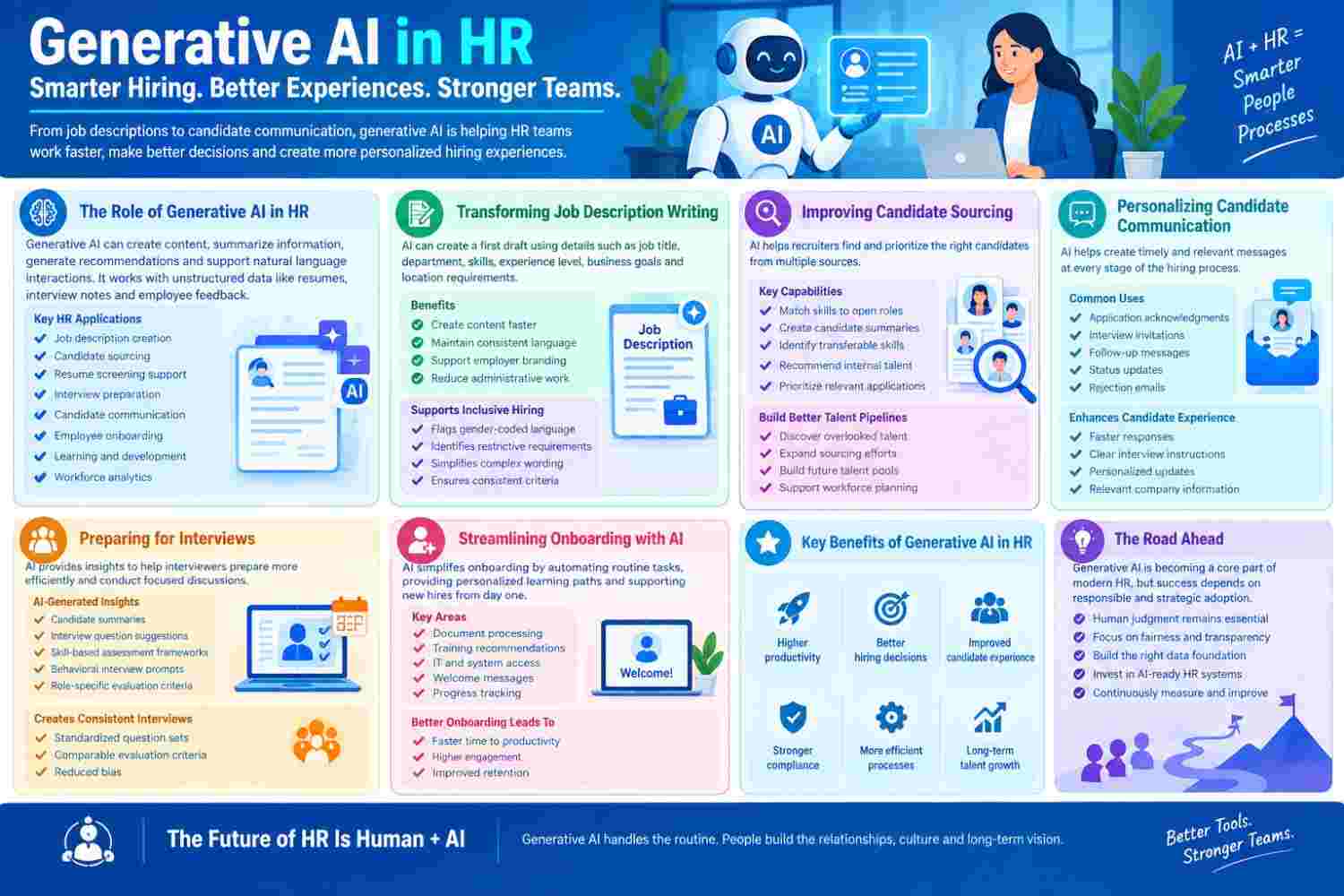
The Role of Generative AI in HR
Generative AI refers to artificial intelligence systems that can create content, summarize information, generate recommendations, and support natural language interactions.
Unlike traditional automation tools that follow predefined rules, generative AI can work with unstructured data such as resumes, interview notes, internal documents, and employee feedback. As part of generative AI HR 2026 initiatives, organizations are applying the technology across several HR functions, including:
- Job description creation
- Candidate sourcing
- Resume screening support
- Interview preparation
- Candidate communication
- Employee onboarding
- Learning and development
- Workforce analytics
Transforming Job Description Writing
Writing job descriptions can be time-consuming. Recruiters often gather information from hiring managers, define responsibilities, outline qualifications, and maintain consistency with company branding.
Many AI recruitment tools enterprise platforms can generate a first draft using details such as:
- Job title
- Department
- Required skills
- Experience level
- Business goals
- Location requirements
This helps recruiters create job postings faster and update them when role requirements change.
Benefits of AI-Generated Job Descriptions
Organizations use these tools to:
- Create content more quickly
- Maintain consistent language across roles
- Support employer branding
- Reduce administrative work
Supporting Inclusive Hiring
AI can also review job postings and flag issues such as:
- Gender-coded language
- Restrictive requirements
- Overly complex wording
- Inconsistent qualification criteria
This helps HR teams create job advertisements that attract a wider range of candidates.
Improving Candidate Sourcing
Finding qualified candidates remains a major challenge for HR teams. Recruiters often review large numbers of profiles across job boards, professional networks, and internal talent databases.
Many AI recruitment tools enterprise platforms help recruiters by:
- Matching skills to open roles
- Creating candidate summaries
- Identifying transferable skills
- Recommending internal talent
- Prioritizing relevant applications
Instead of reviewing every profile manually, recruiters receive organized insights that help them focus on suitable candidates.
Building Better Talent Pipelines
By analyzing past hiring data, AI can highlight patterns linked to successful hires. This helps recruiters:
- Discover overlooked talent
- Expand sourcing efforts
- Build future talent pools
- Support workforce planning
As a result, organizations can take a more proactive approach to recruitment rather than relying only on active job seekers.
Personalizing Candidate Communication
Candidates expect timely updates throughout the hiring process, but managing large application volumes can be challenging for recruitment teams. Many AI recruitment tools for enterprise platforms help recruiters create personalized communication for different stages of hiring.
Common uses include:
- Application acknowledgments
- Interview invitations
- Follow-up messages
- Status updates
- Rejection emails
Enhancing Candidate Experience
Clear communication can improve a candidate’s perception of an employer. Generative AI helps recruiters provide:
- Faster responses
- Clear interview instructions
- Personalized updates
- Relevant company information
By keeping candidates informed, organizations can build a more positive recruitment experience and maintain engagement throughout the hiring journey.
Preparing for Interviews
Interview preparation often requires hiring managers to review resumes, role requirements, and candidate backgrounds. Many AI recruitment tools enterprise platforms support this process by generating:
- Candidate summaries
- Interview question suggestions
- Skill-based assessment frameworks
- Behavioral interview prompts
- Role-specific evaluation criteria
These insights help interviewers prepare more efficiently and conduct focused discussions with candidates.
Creating Consistent Interviews
Maintaining consistency across interviewers can be challenging, especially during large hiring campaigns. Generative AI can support structured interviews through:
- Standardized question sets
- Competency-based evaluation frameworks
- Feedback templates
- Interview scorecards
This helps hiring teams to compare candidates using common criteria and reduces differences in assessment approaches.
The Rise of AI-Assisted Interview Scoring
One of the fastest-growing applications within generative AI HR 2026 initiatives is interview scoring. Rather than replacing recruiters or hiring managers, these tools help analyze information collected during the hiring process.
They can review:
- Interview transcripts
- Written responses
- Assessment results
- Recruiter notes
- Candidate qualifications
How Interview Scoring Works
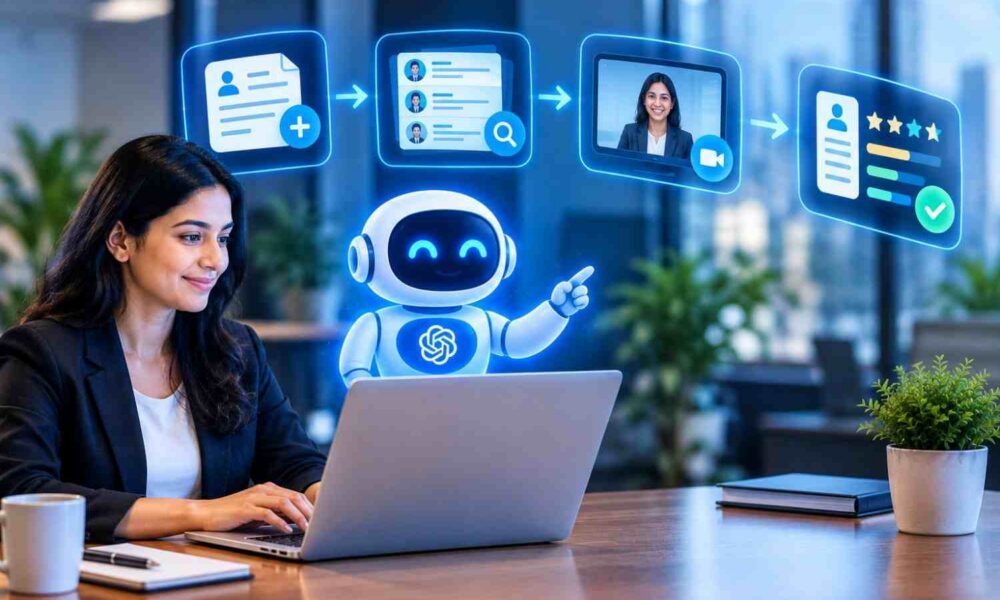
A typical process includes:
- Conducting the interview.
- Recording responses with consent.
- Converting conversations into transcripts.
- Comparing responses with job requirements.
- Generating evaluation summaries.
Benefits of Interview Scoring Tools
Organizations use these tools to:
- Speed up evaluations
- Improve documentation
- Support consistent candidate reviews
- Help interviewers compare feedback
Generative AI in Employee Onboarding
Employee onboarding often involves answering questions, explaining policies, and helping new hires navigate company systems. As organizations expand their use of generative AI HR 2026 initiatives, many are introducing AI-powered assistants during the onboarding process.
These tools can help by:
- Answering common questions
- Explaining company policies
- Providing training resources
- Helping employees find internal information
Creating Personalized Onboarding Journeys
Generative AI can recommend onboarding materials based on:
- Job role
- Department
- Experience level
- Business function
This allows organizations to deliver more relevant onboarding experiences while reducing the time HR teams spend on routine queries.
Supporting Learning and Development
Many generative AI HR 2026 initiatives now include tools that help employees identify skill gaps and discover relevant learning opportunities.
Common applications include:
- Creating personalized training plans
- Summarizing learning materials
- Building internal knowledge resources
- Drafting training content
- Recommending courses and certifications
These capabilities help employees access relevant learning resources more easily while supporting HR teams in managing development programs and workforce skills.
Strengthening Workforce Analytics
Modern HR departments generate enormous amounts of data. Generative AI helps convert that information into insights by analyzing:
- Employee engagement surveys
- Performance feedback
- Exit interviews
- Recruitment trends
- Internal mobility patterns
Better Strategic Decision-Making
These insights can help HR teams identify:
- Skill gaps
- Hiring bottlenecks
- Retention risks
- Leadership development opportunities
Addressing Bias and Ethical Concerns
AI systems learn from historical data, and biased data can influence recommendations or hiring outcomes.
Common concerns include:
- Biased hiring decisions
- Inaccurate candidate evaluations
- Limited transparency
- Privacy and data security risks
- Excessive dependence on automation
HR leaders should regularly review AI-generated outputs and establish governance policies to monitor how these systems are used.
Human Oversight
Generative AI can support HR teams, but it should not replace human judgment. Decisions related to:
- Hiring
- Promotions
- Compensation
- Employee relations
- Performance management
AI-generated recommendations should be reviewed alongside business requirements, candidate potential, and employee well-being before any final decision is made.
What the Future Holds for HR
The future of HR is unlikely to be fully automated. Instead, organizations are expected to combine human expertise with technology to support hiring, workforce planning, employee development, and talent management.
Future developments may include:
- Advanced talent matching
- Real-time workforce insights
- AI-powered career coaching
- Personalized employee experiences
- Internal mobility recommendations
Conclusion
Generative AI is becoming a regular part of HR operations, covering activities such as job description writing, candidate sourcing, onboarding, learning, and interview scoring. It can handle large volumes of information and reduce the time spent on repetitive administrative tasks.
Across industries, generative AI HR 2026 projects are moving from pilot programs to everyday business use. At the same time, AI recruitment tools for enterprise platforms are giving recruiters faster access to candidate insights and hiring data.
Technology can assist with HR processes, but hiring, promotions, employee development, and workplace culture still depend on people. The strongest results often come from combining data-driven insights with human experience, judgment, and understanding of individual circumstances.
FAQs
1. What is generative AI in HR?
Generative AI in HR refers to artificial intelligence tools that create content, summarize information, answer questions, and assist with tasks such as recruitment, onboarding, employee training, and workforce management using organizational data.
2. How does generative AI help with job description writing?
Generative AI can draft job descriptions based on role requirements, skills, experience levels, and responsibilities. Recruiters can edit these drafts, reducing time spent writing while maintaining consistency across hiring activities.
3. Can AI replace recruiters during the hiring process?
No. AI can assist with tasks such as screening applications, organizing candidate information, and summarizing interviews. However, recruiters are still responsible for assessing cultural fit, potential, and final hiring decisions.
4. What are AI-assisted interview scoring tools?
AI-assisted interview scoring tools analyze interview transcripts, candidate responses, assessment scores, and recruiter feedback. They generate structured evaluations that help hiring teams compare applicants using predefined role criteria.
5. Are AI recruitment tools suitable for large enterprises?
Yes. Large enterprises use AI recruitment tools to manage high application volumes, identify relevant candidates, improve recruiter productivity, and maintain more consistent hiring processes across multiple business units.
6. What risks are associated with generative AI in HR?
Key risks include biased recommendations, inaccurate outputs, data privacy concerns, limited transparency, and excessive dependence on automated systems. Regular audits and human review help organizations address these challenges.
7. What is the future of generative AI in HR?
Future developments may include smarter talent matching, AI-supported career guidance, workforce analytics, personalized learning recommendations, and employee support tools that provide information throughout different stages of employment.